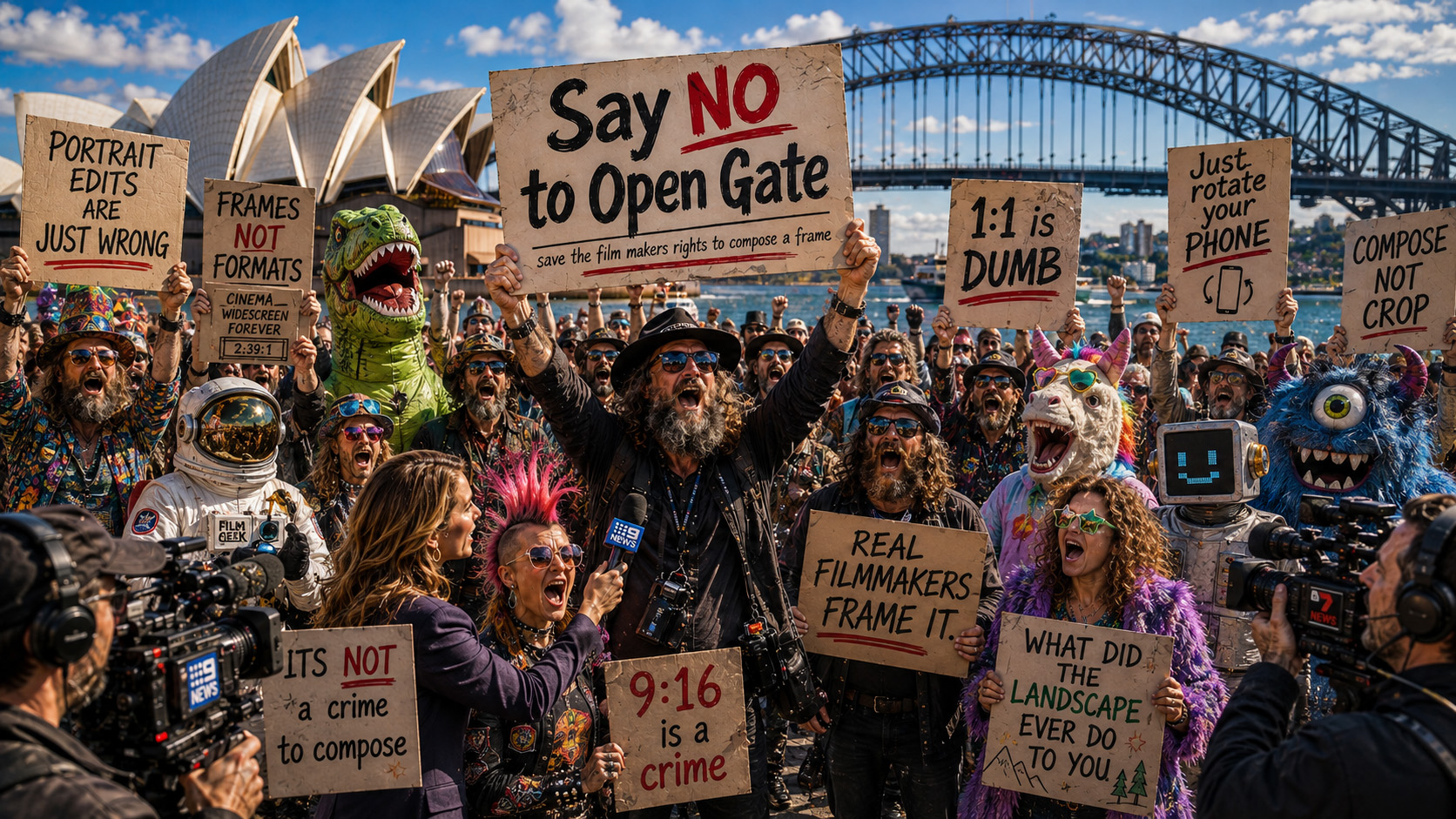
Almost as terrible as when a client says during the briefing:
"Can you shoot Open Gate?"
To a cinematographer, it's almost the equivalent of a client saying:
"Can you just shoot everything wide? We'll zoom in during post."
Cue the internal eye roll.
Because one of the fundamental pillars of cinematography is composition. It's about making deliberate decisions, guiding the audience's eye, controlling perspective, and crafting every frame with intent. Open Gate, in the wrong hands, can feel like those creative decisions are simply being postponed until the edit.
For those lucky enough not to have heard the term, Open Gate technically means recording using the camera's entire sensor rather than cropping it to a standard aspect ratio such as 16:9. Depending on the camera, this is often 3:2 or 4:3.
But that's only the technical definition.
What clients usually mean is: "Can you shoot this so we can create 16:9, 1:1, 4:5 and 9:16 versions from the same footage?"
From a marketing perspective, it makes perfect sense.
One shoot.
Multiple deliverables.
From a cinematographer's perspective, it's a little more complicated.
Shot construction is something directors, cinematographers, camera operators and editors think about constantly. It's the art of building a sequence that flows naturally through wide, medium and tight shots, layered with inserts and the occasional macro shot to create rhythm, emotion and visual interest.
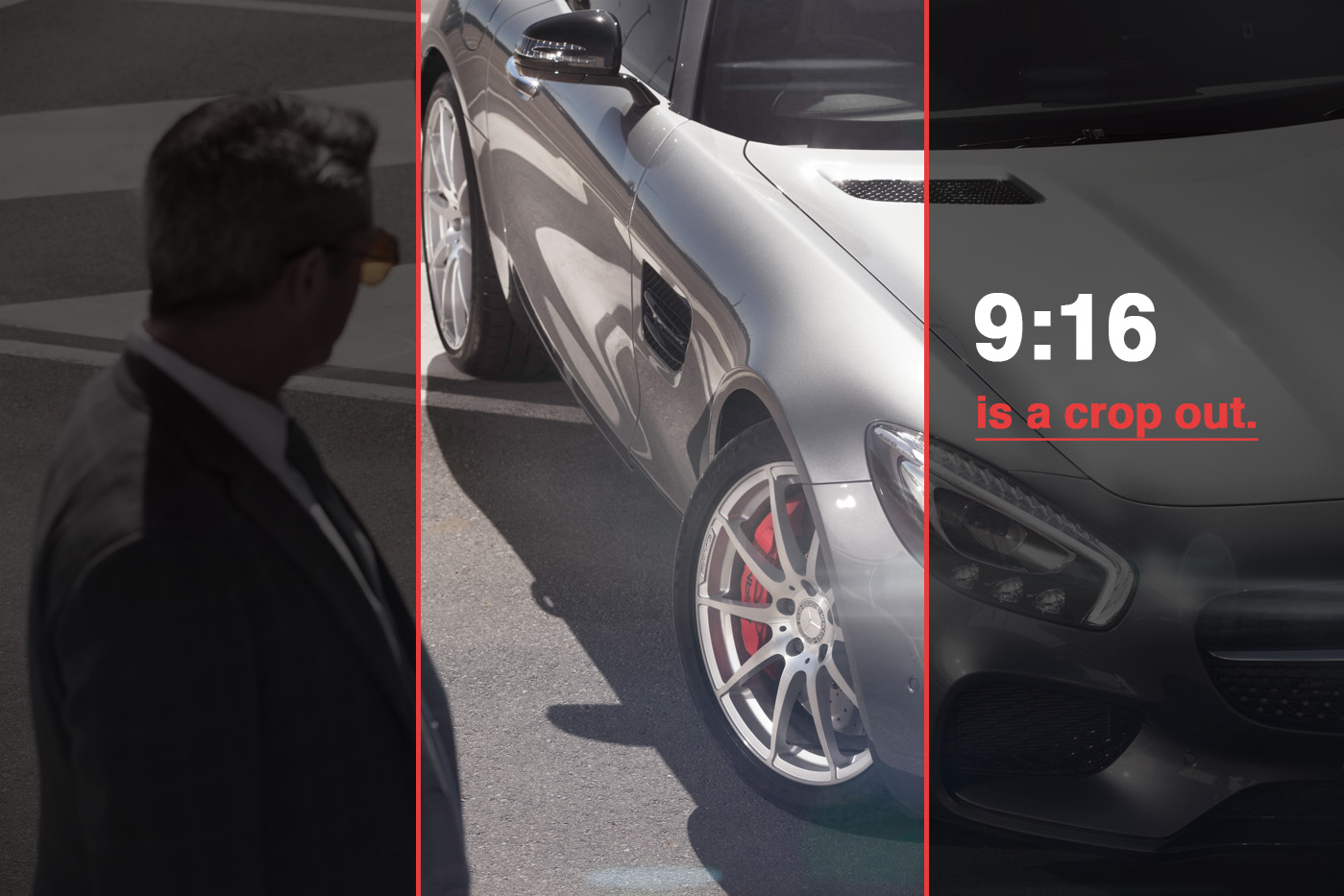
The problem is that macro shots and Open Gate don't always get along. A beautifully composed close-up designed for a 16:9 frame can become awkward when cropped to 9:16. In many cases, you're effectively throwing away two-thirds of the original composition. The image may still work, but it isn't the shot that was originally designed.
Shoot Open Gate.
Shoot wider.
Crop later.
Keep your options open.
It sounds logical.
But filmmaking has never been about keeping every option open.
It's about making creative decisions.
As a little experiment, spend ten minutes scrolling through vertical content. You'll notice beautifully crafted cinematic sequences where the framing suddenly feels strange. Faces become oversized, compositions feel cramped, and shots that were clearly designed for widescreen have simply been squeezed into a portrait format.
Then again...
Maybe I'm just old school.
Let's scrap the 9:16 frame.
We're probably not going to abandon our phones anytime soon, but perhaps we could stop being so lazy, rotate them ninety degrees, and enjoy content the way cinematographers intended, in widescreen.